Why Leading Teams Migrate from MSK to AutoMQ
miHoYo, AviaGames, and many others moved from MSK to AutoMQ, after facing the same struggles with over-provisioning costs, cross-AZ fees, and manual operations.
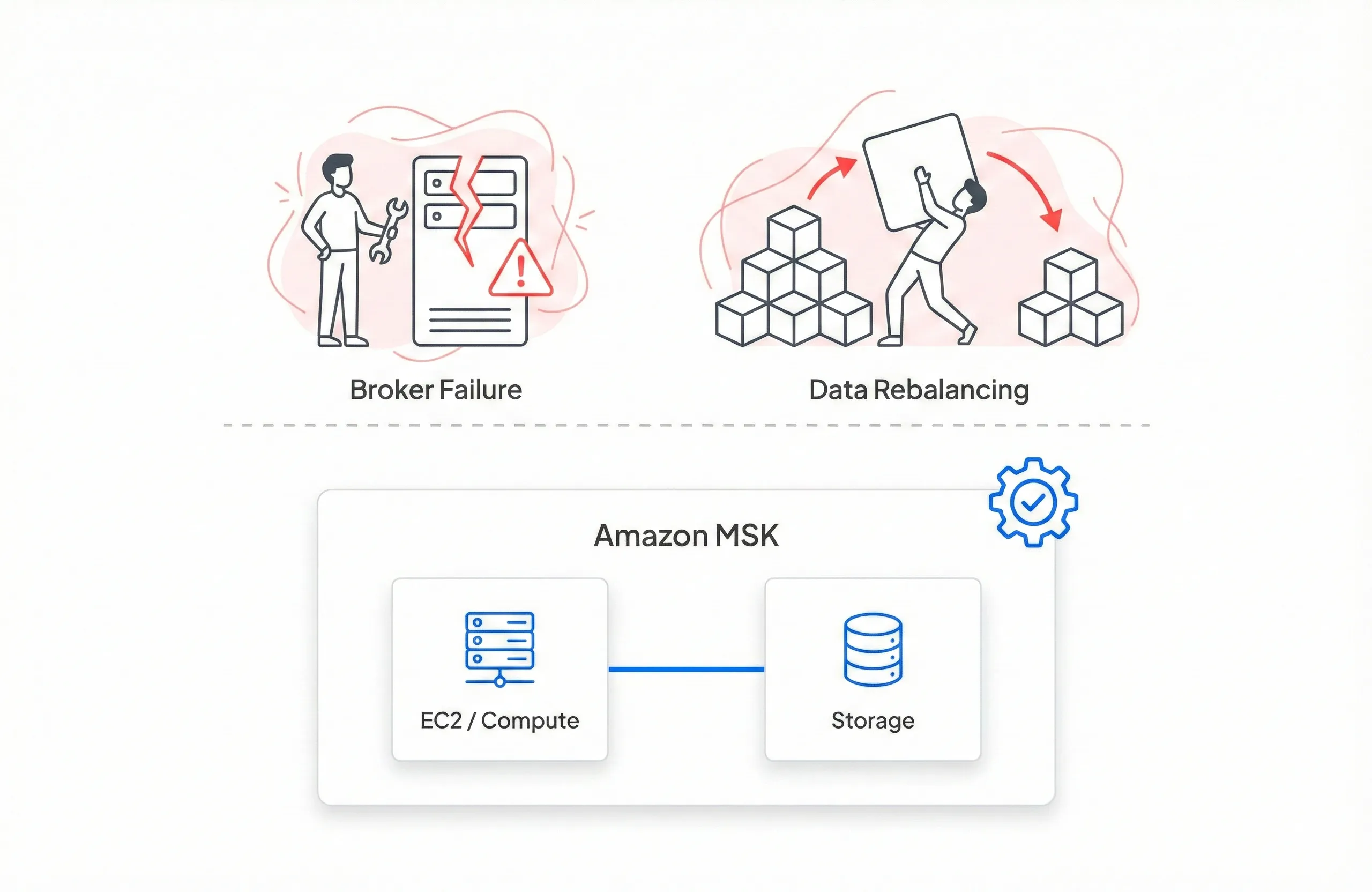
Managed Infrastructure, Manual Kafka
You Fix the Failures
AWS hosts the nodes, but you still handle broker failures and manual data rebalancing.
The "Reassignment" Challenge
Partition movement is manual and tedious, the operational burden stays firmly on your team.
Missing Tooling
MSK provides the cluster but denies you the tools—no native UI, API, or granular Terraform support.
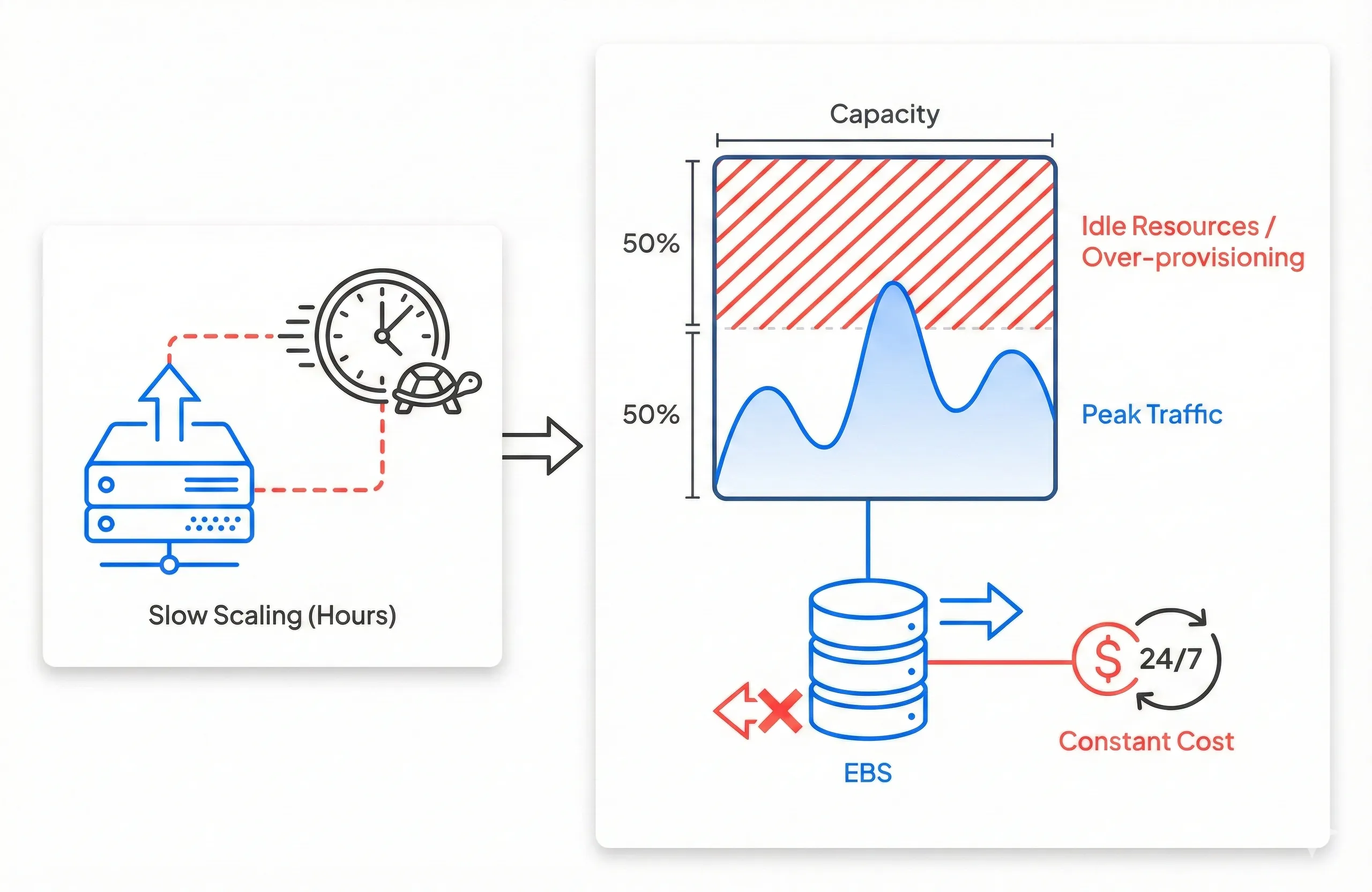
The High Cost of Rigidity: Idle EBS & Slow Scaling
Forced Over-provisioning
100% over-provisioning becomes your only expensive strategy to handle traffic spikes safely.
Pay for Idle Storage
You cannot shrink storage easily, forcing you to pay for unused EBS capacity 24/7.
Risky, Slow Operations
Scaling takes hours of manual, risky operational work—far from true cloud elasticity.
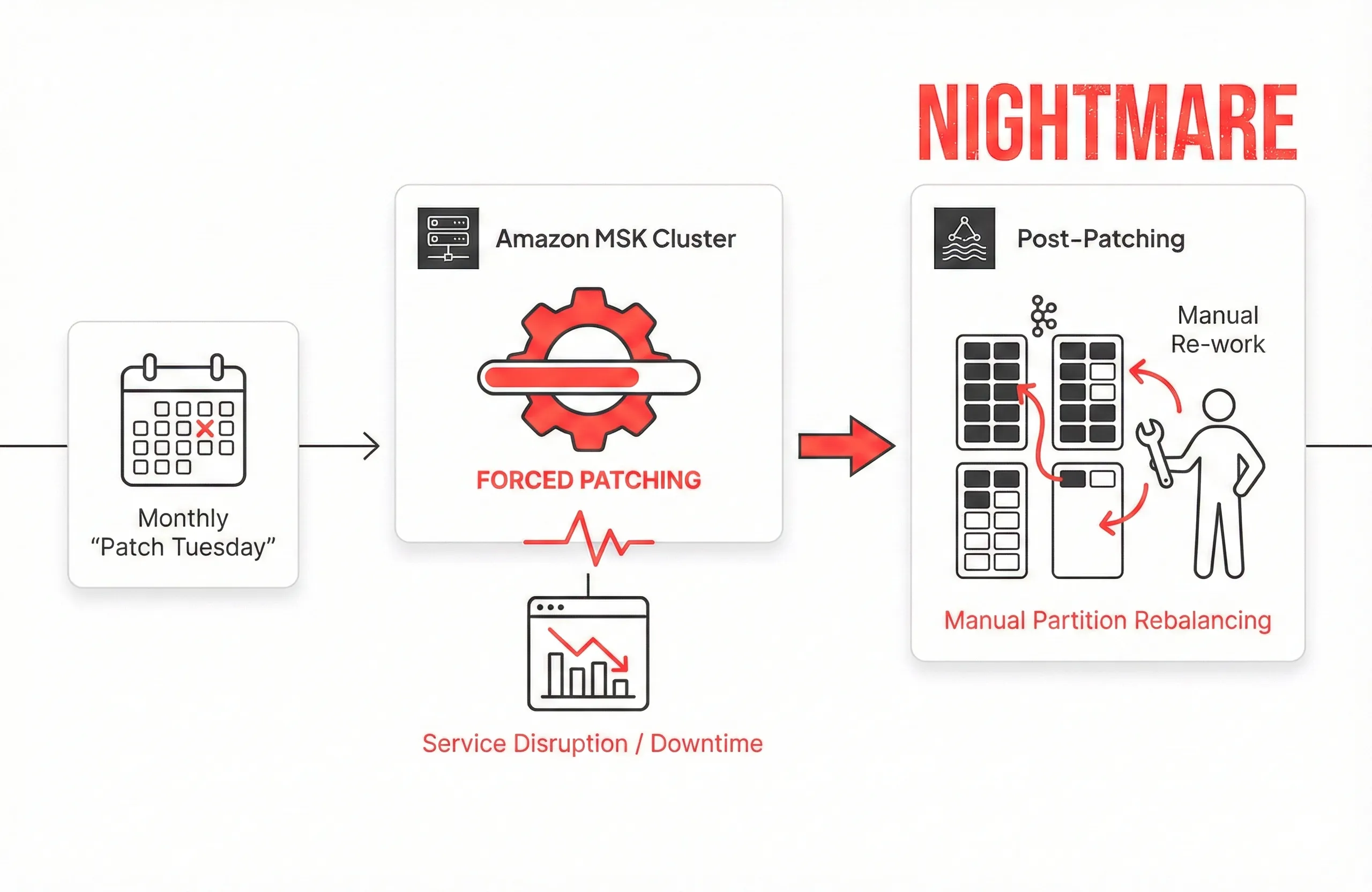
The "Patch Tuesday" Nightmare & KRaft Dead End
Disruptive Rolling Restarts
Mandatory patching takes hours, causing long client perturbations and instability.
Post-Patch Cleanup
Every restart leaves partitions unbalanced, requiring costly manual maintenance to fix.
No Path to KRaft
Your Zookeeper cluster is a dead end; MSK offers no in-place upgrade path to modern KRaft.
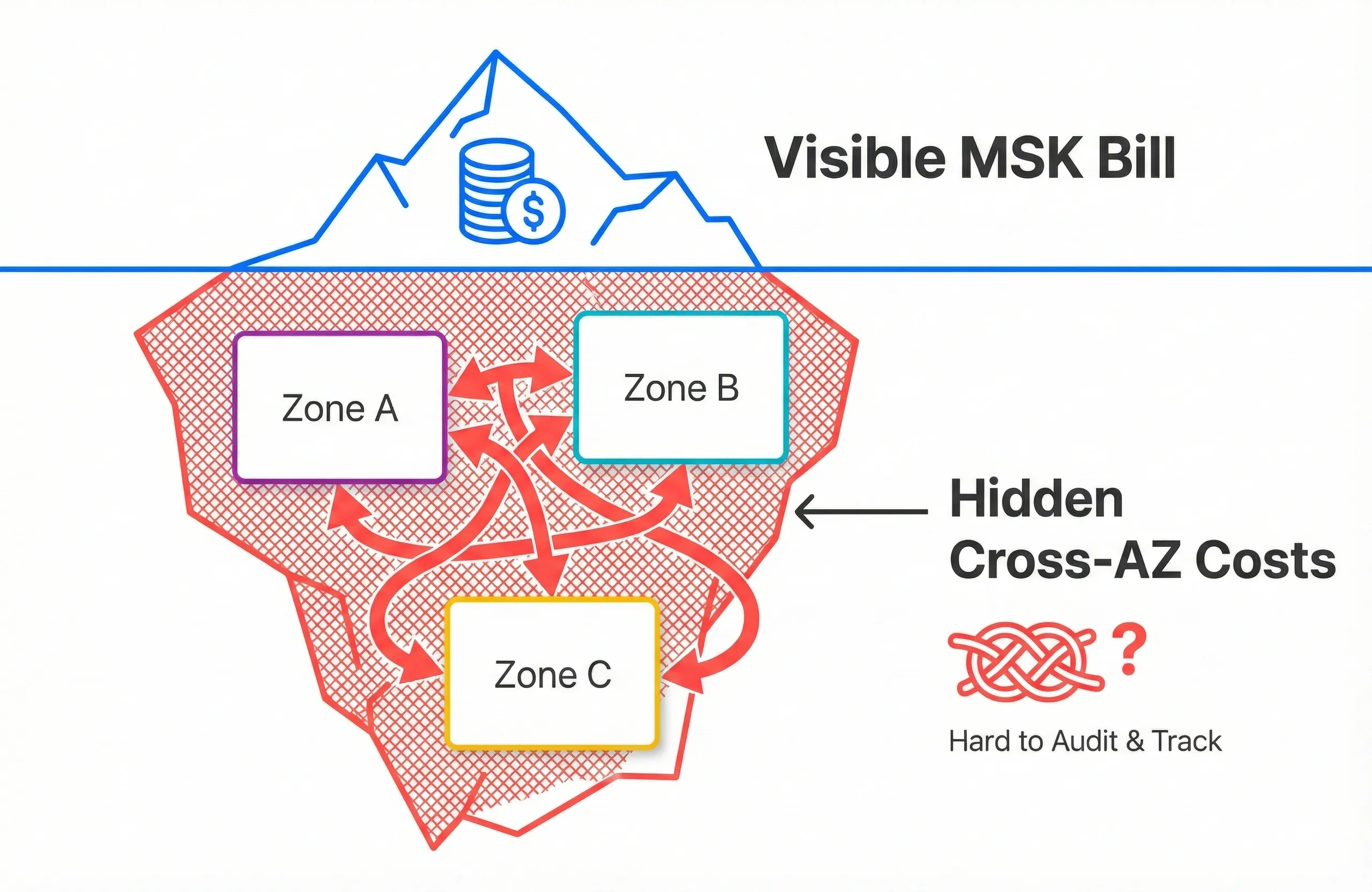
The Silent Budget Killer: Hidden Cross-AZ Fees
The Client-Side Traffic Tax
Producers and Consumers trigger expensive, hard-to-audit data transfer fees whenever they communicate across Availability Zones.
Fees Exceeding the Cluster
In high-throughput workloads, these hidden network charges often cost more than the MSK instances themselves.
AutoMQ solves all of this. The magic comes from being truly Diskless.
No EBS. No over-provisioning. No cross-AZ fees. No manual rebalancing. No patching nightmares. Just pure, elastic, cloud-native Kafka that scales in seconds—not hours—with 100% compatibility and zero operational overhead.
100% Kafka Compatibility. 0% of the MSK Headaches.
| Category | Service | AutoMQ | AWS MSK |
|---|---|---|---|
| Deployment | IaC Control Panel | ||
| IaC Data Panel | No APIs, or proper Terraform support for Kafka resources | ||
| BYOC | |||
| Multi-Cloud Support | (AWS Only) | ||
| Kafka UI | |||
| EKS or Kubernetes Support | Chart or Operator, select your preference. | ||
| Operate | Infra Monitoring | Proactive monitoring | Reactive monitoring |
| Topic Monitoring | Free, pre-aggregated metrics | Topic-level metrics cost extra | |
| Upgrades | Always the latest stable release | Limited version support | |
| Software Patches | Proactive Fixes |
| |
| Migration | Byte-to-Byte Replication (Offset Preservation) | ||
| Zero-downtime migration | No In-Place Upgrade Path for you Zookeeper-based clusters | ||
| Auto Balancing & Stability | By Traffic | ||
| By QPS | |||
| By Partition Numbers | |||
| By Catch-up Traffic | |||
| By CPU/Mem Usage | |||
| Slow Node Isolation | |||
| Catch-up Traffic Isolation | |||
| Scale | Cluster Expansions in Seconds |
| |
| Cluster Shrinkages in Seconds | Pay for idle EBS | ||
| Storage | PAYG for storage | Object Storage | EBS Overprovision |
| Storage Cost | 0.024USD/GB/M | Standard: 0.10USD/GB/M Tiered: 0.06USD/GB/M | |
| Storage Compactibility | Tiered Storage has many limitations:
| ||
| Traffic Cost (Cross-AZ) | Producer | 0 | $0.01/GB |
| Consumer | 0 | $0.01/GB | |
| Replication | 0 | 0 | |
| Integration | Prometheus | ||
| OTLP | |||
| Grafana | |||
| Data Lake | |||
| (Native Iceberg Support) |
A Real-World Cost Analysis: AutoMQ vs MSK
Scenario: 100/300 MiB/s (Write/Read) | 5,000 Partitions | 72h Retention
* Pricing based on publicly listed prices from AWS MSK and AutoMQ.
Why AutoMQ Costs Less
- Zero Cross-AZ Fees: Diskless architecture eliminates massive data transfer costs that plague MSK/Express
- No EBS Over-Provisioning: Pay only for what you use with S3-native storage—no wasted capacity planning
- True BYOC Model: Full transparency on costs—no hidden AWS markups or surprise bills

Real Teams. Real Migrations.
Real Results.
These companies migrated from MSK to AutoMQ and unlocked massive savings, instant scalability, and zero-ops overhead. Want the full story behind their success?
Learn how they did it
FAQs
Don't see an answer to your question? Check our docs, or contact us.